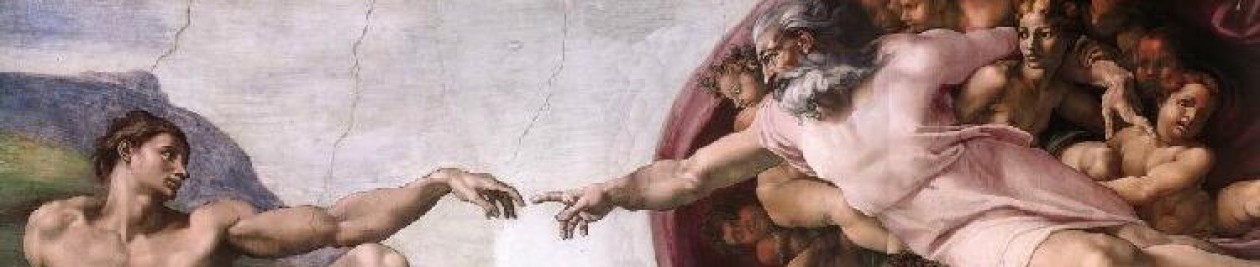
Science Rendition
And the progressively expanding, elevating power complex thereby renders the ethereal element (ether) expansive and progressive in nature; this constitutes the second phenomenological cycle (Eon), involving the powers of transmutation, transformation.
KJV: And God called the firmament Heaven. And the evening and the morning were the second day.
Key Words: ALHYM RQYE SHMYM ERB BQR SHNY YWM
SH-N-Y – ‘mutation, transformation of state’
II. שן, שני or שנים two. The root שן, composed of the sign of relative duration ש, and that of produced being or growth ן, contains all ideas of mutation, of transition, of passing from one state to another, of redundancy. Thus the name of this number in bringing diversity, change and variation, is the opposite in everything from the preceding number, which, as we have seen, arrests division and tends to immutability. The feminine is שתי, שת and שתים. (d’Olivet)
2 General Note
These verses apparently relate the creation of a firmament in the midst of the waters to divide the waters which were above the firmament. And the translation goes on to say: and God called the firmament heaven. (In some texts; expanse for firmament).
It is true that Maym (Mem-Yod-Mem: 40.10.40) in colloquial Hebrew means “waters”. The Qabalists (and alchemists) have always considered Maym as a symbol of the biochemical sphere’s attributes, because analogically the waters are the natural environment for epigenisis.
Let us not forget that we are dealing with a treatise on thermodynamics. We have seen in Genesis 1,1 a double equation of energy as Aleph and Yod (as infinite animation and as its own physical casting). Awr is the equation of their symbolic wedlock (Raysh, 200 being the symbol of the entire cosmic physical support). We have then seen Yavdel as the biosphere’s process which originates two trends of structures in each of the two aspects of energy, Awr and Hhosheykh. In Genesis 1, 6-8, which we are now considering this entire process as seen from the point of view of Bayt (2), so-called the second “day”; Bayt being the symbol of all containers. The protagonists, Raysh and Aleph must be expressed now as they appear in existence. But we know that Aleph does not possess the quality of existence in duration. Therefore its symbol must perforce be Qof (100) because, as we have already stated, Qof is symbol of cosmic Aleph in existence, both Aleph and Yod, blending the opposites, timelessness and time. Raysh and Qof assert their existence Yod. But what is the result of this wedlock? It obviously is Ayn (70), the principle of indetermination, which is the common stake of both parties. The equation thus formed, Raysh-Qof-Yod-Ayn (200.100.10.70): reads Raquiy, and is an energy which, not being fixed in extent, has the intrinsic quality of expansion. Energy in expansion: that is the definition of space according to Qabala. It is in expansion because, as its own container, energy cannot cope with itself. It cannot but be perpetually its own overflowing.
We are very far indeed from the “firmament” which is supposed to translate Raquiy, and further still from its other name “heaven” of the canonical text.
Shamaym (the schema which is translated “heaven”) is simply the impact of Sheen (300), the cosmic metabolism, upon Maym. The elements of Maym that bear the impact are stirred by the Ayn (70) of Raquiy and they set into motion their own metabolism Lammed (30). The schema thus obtained is Mem-Ayn-Lammed which is read Me-aal (40.70.30) and is translated “from above” or “which were above”, according to the traditional English version. The elements of Maym that do not bear the impact become unavailable for conversion into functional work and in that state of entropy, they return to Tav (400) in which the undifferentiated Hhayt (8) restores the resistance of Tav (400). The schema of that part of Mem is therefore: Mem-Tav-Hayt-Tav (40.400.8.400). It is read Metahhat and is translated “from under” or “which were under”.
Thus is seen the separation of the “living waters” and of the “dead waters”, from the viewpoint of Bayt (2), said to be the “second day”. It is an explanation of the mechanism by which, in Genesis 1,1, Shamaym is formed. (The Cipher of Genesis, Carlos Suares, p. 91-92)
 The Science Bible ... for Life