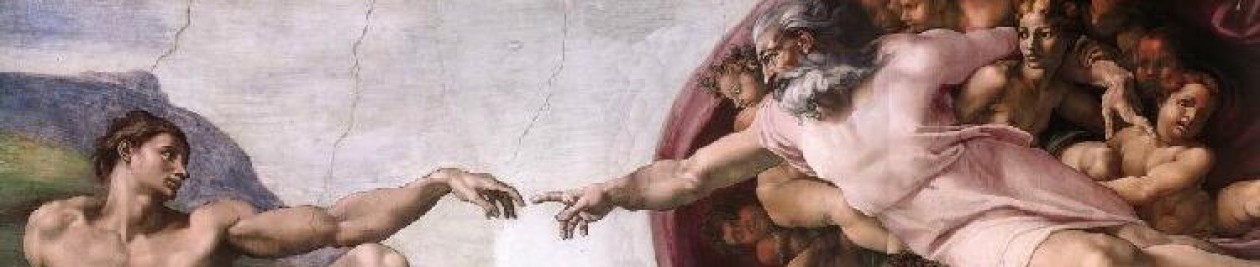
Science Rendition
But if it were to assimilate or even desire to take in the central source of generative power of the organic sphere of life, it would, as a result of the nature of the progressively expanding power complex of creation, result in a transformation of consciousness taking it back to the Universal Source.
KJV: But of the fruit of the tree which is in the midst of the garden, God hath said, Ye shall not eat of it, neither shall ye touch it, lest ye die.
Key Words: ETZ GN ALHYM AMR NGE MWTH
N-G-E – ‘merge, super-impose, possess’
5060. naga, naw-gah´; a primitive root; properly, to touch, i.e. lay the hand upon (for any purpose; euphem., to lie with a woman); by implication, to reach (figuratively, to arrive, acquire); violently, to strike (punish, defeat, destroy, etc.)
That is to say, it is not permitted you to stretch out, to aspire, to have your desires…it signifies literally, in its verbal state, to expire, to bear its soul wholly into another life. (The Hebraic Tongue Restored, Fabré d’Olivet, p. 99)
NG This root is applied to every kind of reflected light, after the manner of a mirror; of solar refraction: thence, the ideas of opposition, of an object put on the opposite side. (The Hebraic Tongue Restored, Fabré d’Olivet, p. 397)
GE Root analogous to the root גו, but presenting the organism under its material view point. (The Hebraic Tongue Restored, Fabré d’Olivet, p. 316)
GH, GW, GY The organic sign united either to that of life, or to that of universal convertible force, or to that of manifestation, constitutes a root which becomes the symbol of every organization. This root which possesses the same faculties of extension and aggrandizement that we have observed in the root גא, contains the ideas apparently opposed to envelopment and development, according to the point of view under which one considers the organization. (The Hebraic Tongue Restored, Fabré d’Olivet, p. 311-312)
M-W-TH – ‘transmutation, fusion with/return to Being’
…whose literal meaning is a fusion, a sympathetic extension, a passing, a return to the universal seity… Thus, the idea that is contained in the Hebraic verb to die has no connection with anything which pertains to destruction or annihilation, as Moses has been accused of having thought; but on the contrary, to a certain transmutation of the temporal substance. (The Hebraic Tongue Restored, Fabré d’Olivet, p. 99-100)
 The Science Bible ... for Life